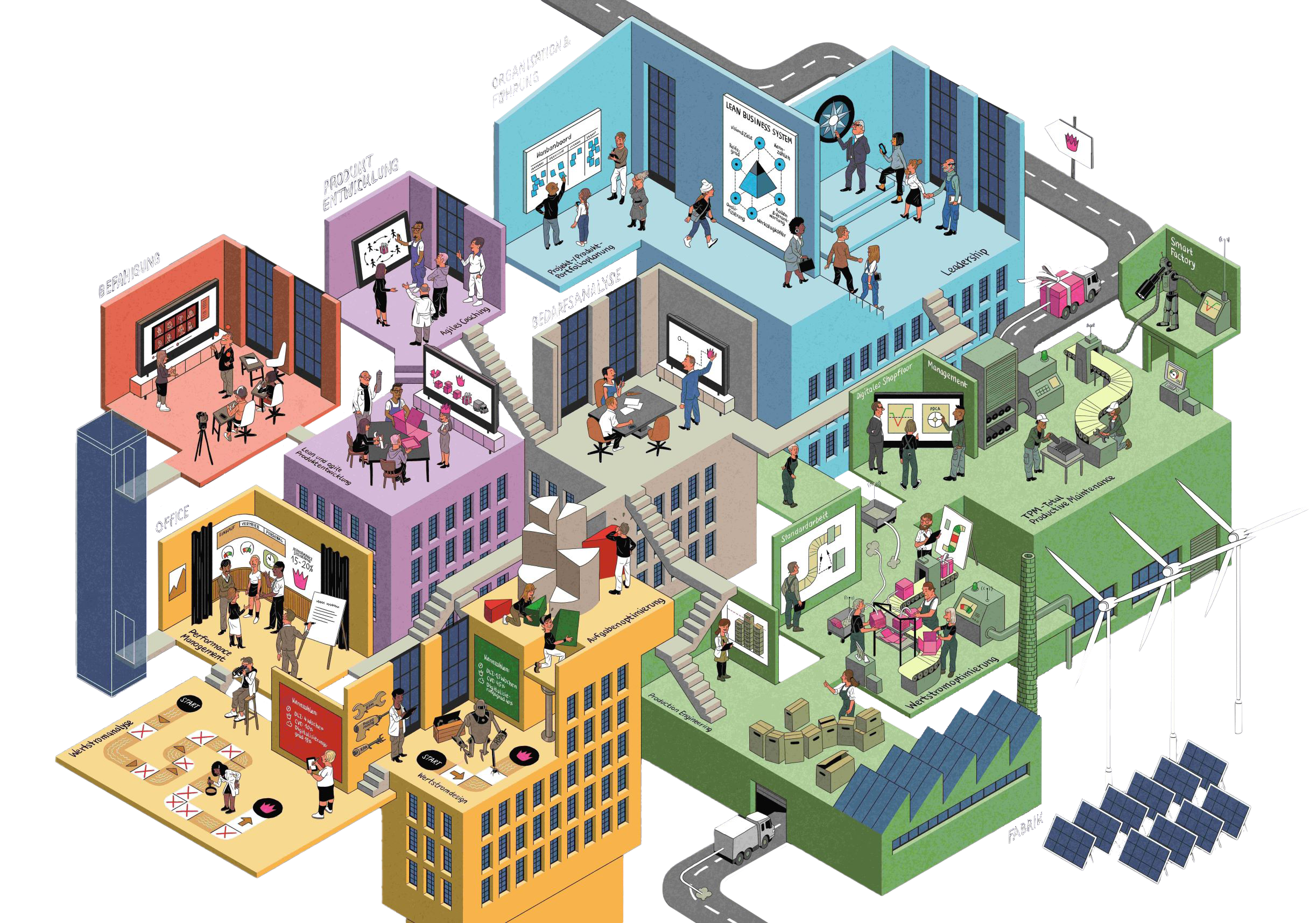

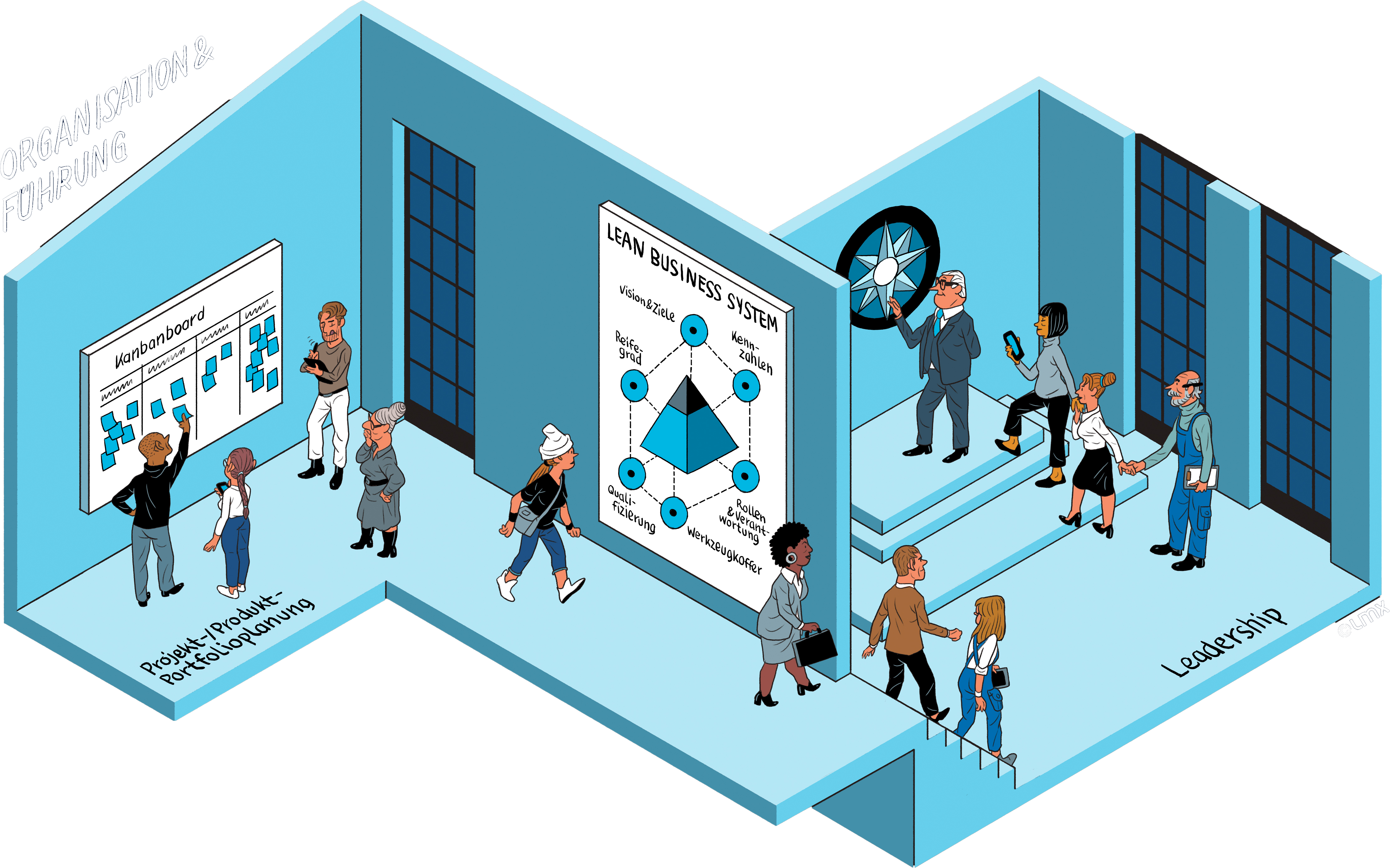
Lean. Digitalization. AI. Powerful trio. We develop organizations that improve every day.

LMX helps companies combine Lean Management, digitalization, and artificial intelligence into a powerful integrated system. We create efficient processes, further develop leaders and employees, and use data and modern technologies in a targeted way to deliver greater customer value, better decisions, and sustainable improvements.

Awarded: Measurable Results. Sustainable Change. Effective Organizations. Satisfied Customers.

LMX supports companies on their path to greater performance, customer value, and future readiness. We combine Lean Management, digitalization, and artificial intelligence into a holistic approach that improves processes, strengthens leadership, and empowers people.

Through the combination of in-depth analysis, pragmatic implementation, training, and coaching, we create sustainable improvements along the entire value chain. Our aspiration is not to develop concepts, but to achieve measurable results that last.

>850

Projects

>100

Customers

>350

Years of experience in team

Ø9

Projects per Customer

Webenar

Knowledge straight from practical experience!
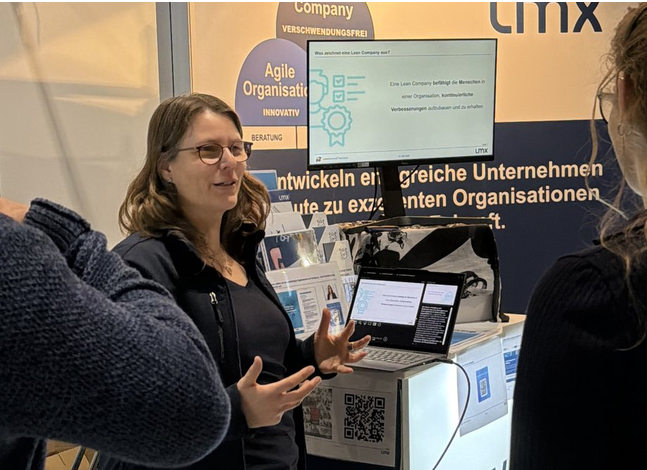
Join our interactive live webinars and learn from the experts – flexibly, from anywhere.
Explore webinars
YOUR PARTNER

Lean. Digitalization. AI. Powerful Trio.

LMX supports companies across industries on their path to greater performance, customer value, and future readiness. Whether industry, services, insurance, healthcare, or public administration: we help organizations improve processes, empower employees, and anchor change sustainably.

Our approach combines Lean Management as the foundation with digitalization and artificial intelligence as enablers. The focus is not on technologies, but on the people who create value for customers every day.

Customer Value. Empowerment. Effectiveness. Sustainability.

Consulting

Shorten lead times. Secure ramp-ups. Increase conversion rates.

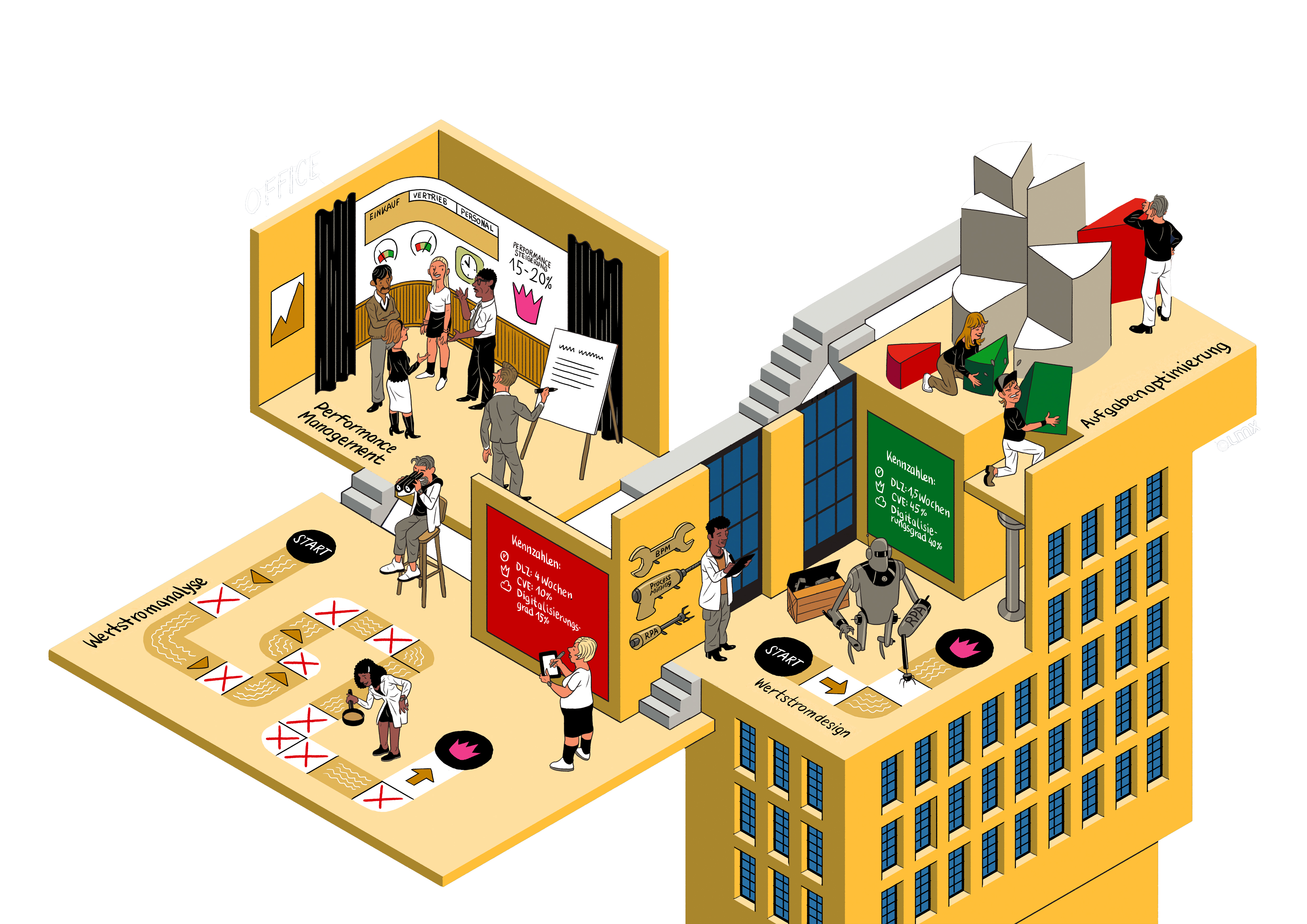
We help companies successfully solve specific challenges and achieve measurable results. Together, we analyze root causes, create transparency, and develop pragmatic solutions with sustainable impact.


Lean Management

The foundation for sustainable success.

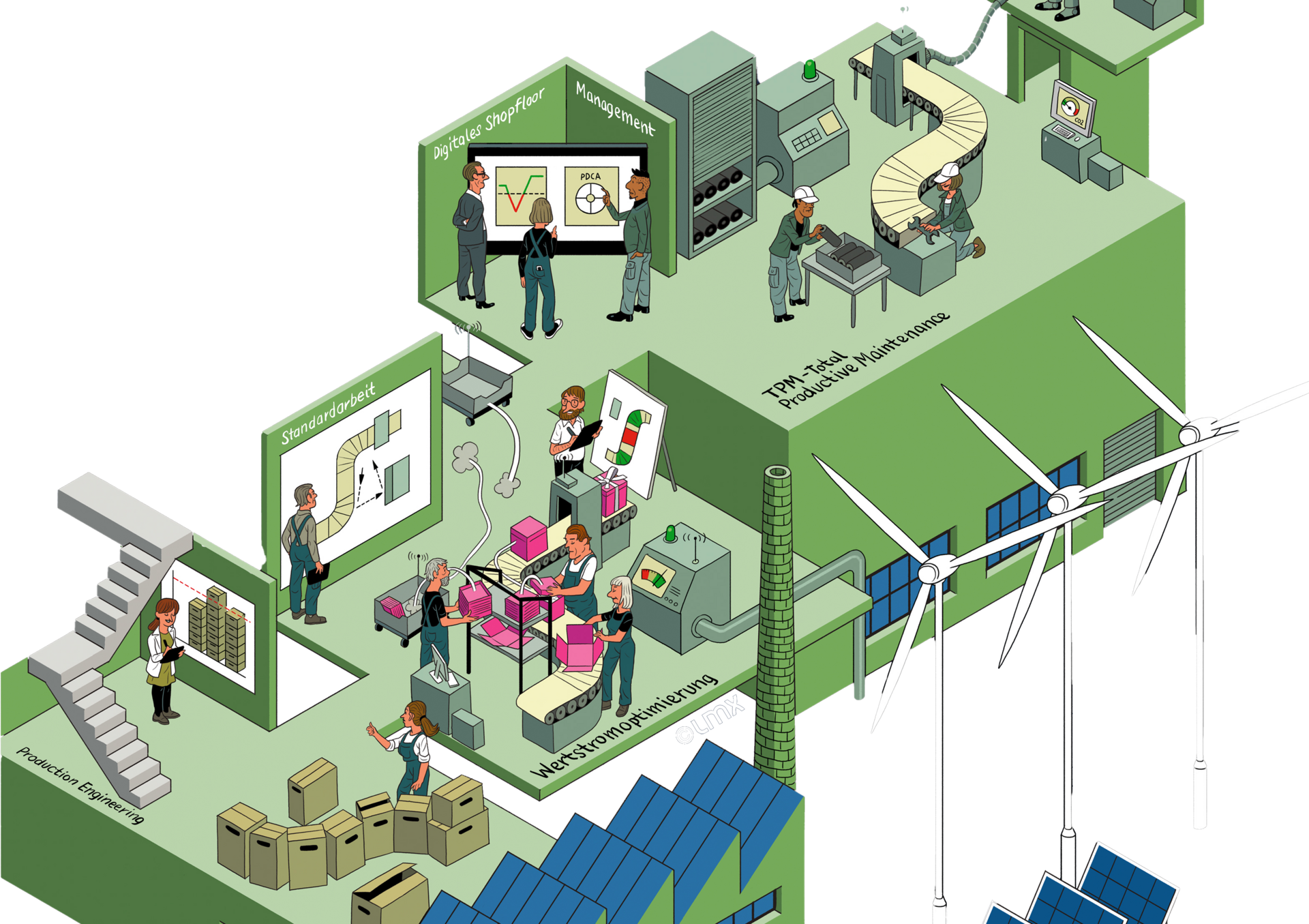
For us, Lean means consistently aligning value creation with customer value, avoiding waste, and empowering employees to continuously improve processes. The foundation for excellence, digitalization, and AI.


Qualification

From Lean Practitioner to Lean Expert. From team coaching to leadership programs.

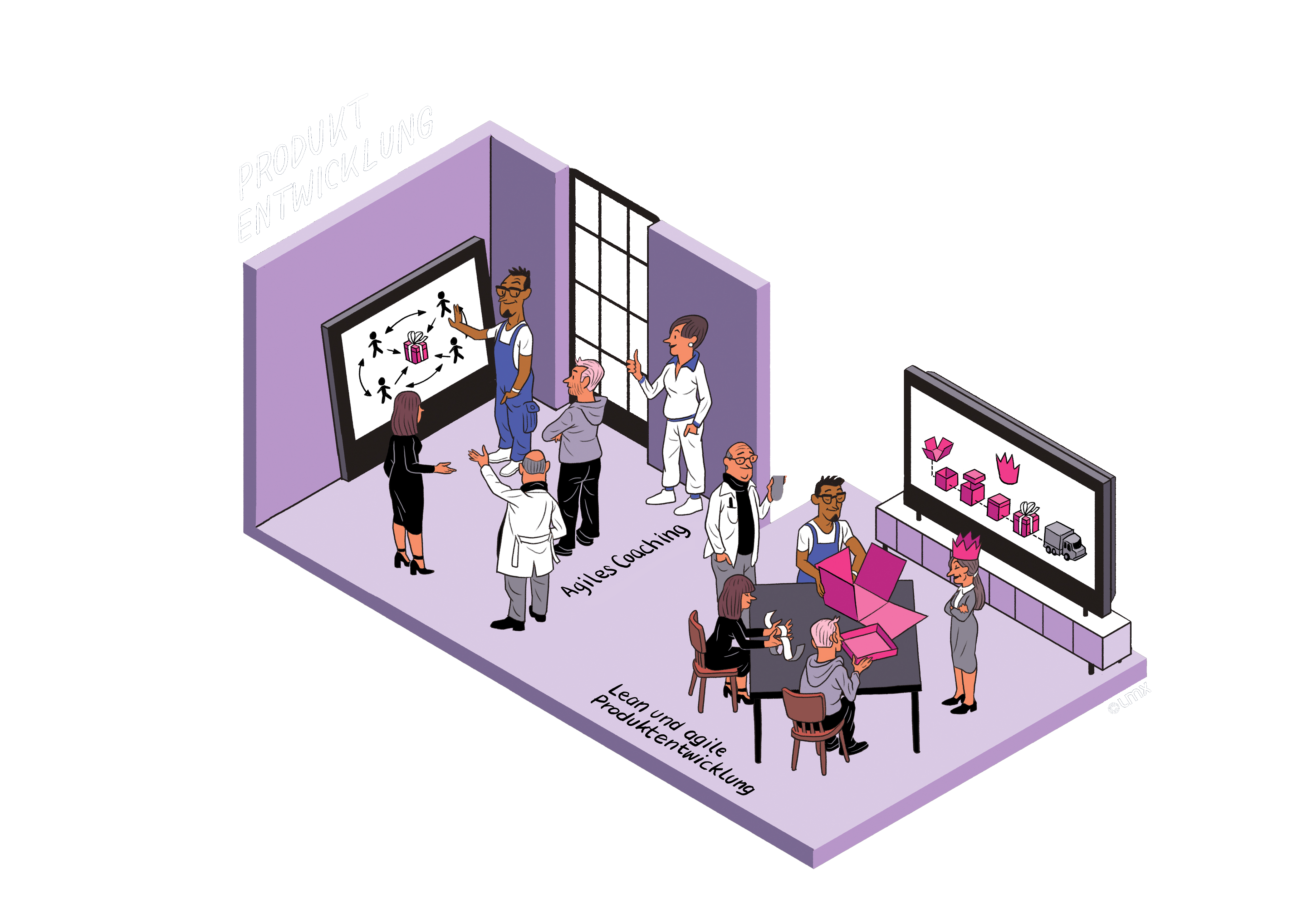
We empower specialists, leaders, and teams to apply Lean principles and problem-solving skills effectively in their day-to-day work. Practical, sustainable, and immediately actionable.


AI Application

Increase customer value instead of automating waste.

We identify use cases with real added value and help companies deploy artificial intelligence effectively and responsibly. Always with the goal of supporting employees and achieving better results for customers.


Transformation

From individual initiatives to a Lean Company.

We support companies in developing an organization in which customer value, continuous improvement, and effective leadership are firmly anchored in daily work. This creates sustainable change instead of short-term optimization.

Digitization

Use data. Make better decisions.

We design digital processes and data-driven ways of working that enable fast analyses, sound decisions, and greater transparency. This creates the conditions for efficiency, scalability, and continuous improvement.


Contact

Your personal contact

We look forward to your questions, suggestions and requests and will get in touch with you as soon as possible.


Discuss your specific questions and problems with LMX experts: solution-oriented and pragmatic.
learn more


On site or remote?

We are also there for our customers remotely and offer a comprehensive service portfolio - regardless of location!


eConsulting

Driving the right projects and topics - we support you e.g. in solving the following challenges:

  • Virtual value process mapping to identify current and crisis-related bottlenecks 
     
  • Value stream analysis in the indirect area to ensure process capability even in virtual teams due to home offices
     
  • Management of order peaks caused by crisis-related high volumes of call-offs
eCoaching

In a crisis, managers are particularly challenged!

Our eCoaching offers middle management executives personal and professional support in the context of lean management and leadership. How do I lead a virtual team, since all employees are in the HomeOffice?

How does my team remain workable in a crisis?
How do I prioritize current tasks?
How do I prepare my team for the ramp-up?

These are just a few of the questions our experienced coaches can assist with. The coaching is completely digital with MS Teams, Skype, etc.

eTraining

We now offer the certified Lean Expert training with a focus on Production, Administration or Development and many other training courses as live online training.

Participants receive a certificate from the Ruhr University Bochum after successfully passing an oral exam and completing a practical task.

The LMX Qualification Platform is used to deepen individual knowledge through interactive content.

Viessmann
Schwartau
VW
SWD
Schaeffler
Stadtentwässerungsbetriebe Köln
Continental
Bosch
3M
Dörken
Mayer Cie
RAG
Siemens
Benning
Hydro
Vertec
Gigaset
HansaHeemann
B/S/H/
Sky
LTS Lohmann

FAQ: General Lean Management

Specific search query: What is Lean Management, explained simply?

Lean Management is a mindset and leadership philosophy that helps companies maximize customer value while consistently reducing waste. At its core is the question of which activities truly create value for customers and which processes unnecessarily consume time, resources, or energy.

Lean Management does not look only at individual processes, but at the interaction of people, leadership, structures, and ways of working. The goal is to create transparency, make problems visible, and actively involve employees in improvements.

Lean originated in the Toyota Production System. Today, however, Lean Management is used across industries, including production, administration, sales, health care, the public sector, and service companies.

Lean Management is therefore much more than a collection of methods. It describes a mindset that enables organizations to learn continuously, improve processes, and secure their long-term competitiveness.

Specific search query: What benefits does Lean Management offer companies?

Lean Management helps companies make processes more efficient, transparent, and customer-focused. Key benefits include shorter lead times, less waste, better quality, higher productivity, and stronger alignment with customer value.

At the same time, Lean Management strengthens the problem-solving skills of teams and leaders. Employees are empowered to identify problems in daily work, analyze root causes, and actively implement improvements. This creates not only short-term efficiency gains, but also a sustainable improvement culture.

Another advantage is better collaboration across departmental boundaries. Lean creates transparency around workflows, interfaces, and responsibilities. This reduces waiting times, follow-up questions, duplicate work, and media breaks.

For companies, Lean Management therefore means more than cost reduction. It helps them respond faster to customer requirements, involve employees more effectively, and secure their long-term competitiveness.

Specific search query: When is Lean Management worthwhile in a company?

Lean Management is worthwhile whenever companies want to improve their performance not just in isolated areas, but in a sustainable way. Common triggers include long lead times, high inventories, unclear responsibilities, frequent follow-up questions, quality problems, a shortage of skilled workers, or heavy workloads in teams.

Lean Management is especially useful for organizations that want to build a culture of continuous improvement. Instead of implementing individual optimization projects, Lean enables employees and leaders to solve problems independently over the long term and continuously develop processes on their own.

Lean originated in the Toyota Production System, which was developed in a time of scarce resources. This basic idea is more relevant today than ever: companies must make better use of existing resources, reduce waste, and consistently align their processes with customer value.

Lean Management is therefore worthwhile both in crisis situations and in growth phases. It creates the foundation for efficiency, adaptability, and sustainable competitiveness.

Specific search query: How do you start with Lean Management?

Lean Management can be introduced in different ways. Many companies start with a pilot project in a selected area to achieve initial visible improvements and build confidence in the Lean mindset. Others begin with a value stream analysis, the development of a continuous improvement process, or the training of leaders and employees.

What matters is that the starting point fits the organization and the specific challenge. In a production area, for example, the focus may be on reducing lead times or inventories. In administrative areas, the emphasis is often on faster decision-making processes, fewer coordination loops, or greater transparency around tasks and priorities.

The key to success is not to treat Lean as a one-time project. Lean Management should be embedded in daily work over the long term. This requires clear goals, leaders who actively support improvements, and employees who are enabled to solve problems systematically.

Specific search query: Why does Lean Management fail in companies?

Lean transformations often fail not because of the methods, but because they are not embedded in day-to-day work. Many companies start with workshops, 5S activities, shopfloor boards, or value stream analyses without simultaneously developing leadership, collaboration, and problem-solving capabilities in a sustainable way.

When Lean is understood as a short-term project, initial improvements often disappear again after a short time. Another common reason is that employees and leaders are not trained sufficiently. Lean can only be effective when people in the company understand why changes are necessary, how problems are solved in a structured way, and what role they themselves play in the improvement process.

A lack of management attention can also weaken Lean transformations. If leaders do not actively model, prioritize, and follow up on Lean, it often remains limited to individual initiatives.

Successful Lean transformations therefore combine methods with capability building, leadership, and consistent implementation. Sustainability emerges only when Lean becomes the organization’s lived way of working.

Specific search query: What are the most important Lean methods?

There are numerous Lean methods and tools that help companies improve processes, reduce waste, and solve problems systematically. The best-known methods include standardization, shopfloor management, 5S, PDCA, Gemba walks, visual management, Kanban, Poka Yoke, value stream analysis, and waste analysis.

However, the important point is this: Lean Management does not begin with selecting a method, but with understanding the specific challenge. Not every tool fits every problem. A value stream analysis, for example, is especially useful for making material and information flows visible. PDCA supports structured problem solving. Shopfloor management helps teams create transparency around goals, deviations, and actions.

The LMX Lean Study shows that methods such as standardization, shopfloor management, 5S, PDCA, Gemba walks, visual management, Kanban, Poka Yoke, and waste analysis are among the Lean tools used frequently.

The decisive factor is not to introduce methods in isolation, but to integrate them effectively into daily work.

Specific search query: What is PDCA in Lean Management?

PDCA stands for Plan, Do, Check, Act and is a central method for structured problem solving and continuous improvement. The approach helps teams implement improvements systematically rather than randomly or purely intuitively.

In the first step, Plan, the problem is understood, the cause is analyzed, and an improvement approach is developed. In the second step, Do, the solution is tested or implemented. In the third step, Check, the results are reviewed: Did the action achieve the desired effect? In the fourth step, Act, the successful solution is standardized or further adjusted as needed.

PDCA is especially important because many improvement initiatives fail when causes are not understood precisely or actions are not verified. The PDCA cycle creates a learning loop that enables organizations to solve problems sustainably.

In Lean Management, PDCA is therefore not just a method, but an expression of a mindset: test, learn, improve, and permanently embed what has been learned in the process.

Specific search query: What does Lean leadership mean?

Lean leadership describes an understanding of leadership that promotes continuous improvement, learning, and personal responsibility. Leaders do not simply set goals; they create the conditions that enable employees to identify problems, develop solutions, and implement improvements independently.

At the center is a coaching style of leadership. Lean leaders ask questions, encourage reflection, support structured problem solving, and help teams learn from deviations. They also ensure that goals, metrics, and priorities are transparent and that improvement work has space in day-to-day operations.

Lean leadership is especially important because Lean Management does not succeed through methods alone. Without effective leadership, improvements often remain isolated or lose momentum after a short time. Leaders therefore play a central role in embedding Lean sustainably.

A good Lean leader develops people, strengthens responsibility, and ensures that continuous improvement is understood not as an additional task, but as part of daily work.

Specific search query: How can you recognize a Lean company?

A Lean organization is not recognized only by methods such as shopfloor boards, 5S, or value stream analyses. What matters more is how the organization thinks, leads, and acts. Typical characteristics include a clear focus on customer value, high transparency around processes and metrics, fast problem solving, and clear responsibilities.

In a Lean organization, problems are not hidden; they are made visible and addressed systematically. Employees contribute their own improvement ideas and are actively involved in change processes. Leaders act not only as decision-makers, but also as coaches who develop teams and enable learning processes.

Another characteristic is the consistent use of facts. Decisions are made as much as possible based on data, observations, and root cause analyses. Improvements are not only initiated, but also followed up and embedded in daily work.

A Lean organization is therefore a learning organization. It improves continuously and uses Lean not as a project, but as a permanently lived way of working.

Specific search query: How do I measure the success of a Lean transformation?

The success of a Lean transformation is reflected not only in better metrics, but also in the behavior of the organization. Measurable results are, of course, important—for example, shorter lead times, higher productivity, better quality, lower inventories, or higher on-time delivery. However, a Lean transformation is truly sustainable only when the way people collaborate also changes.

Typical characteristics of successful Lean transformations include: problems are addressed openly, employees contribute their own improvement ideas, leaders support their teams through coaching, and decisions are made more strongly on the basis of facts. Improvements are also not implemented only once, but permanently embedded in daily work.

Another important sign of success is that Lean is no longer dependent on individual people or external consultants. The organization develops the ability to identify, prioritize, and solve problems independently.

A successful Lean transformation therefore changes not only processes, but also leadership, collaboration, and corporate culture.